The Eighteen Hells
Eighteen illustrated scenes, read through scripture, morality books and folklore.
The Eighteen Hells 18
The sequence follows the narrative version used in this collection. Illustrations are modern cultural interpretations.
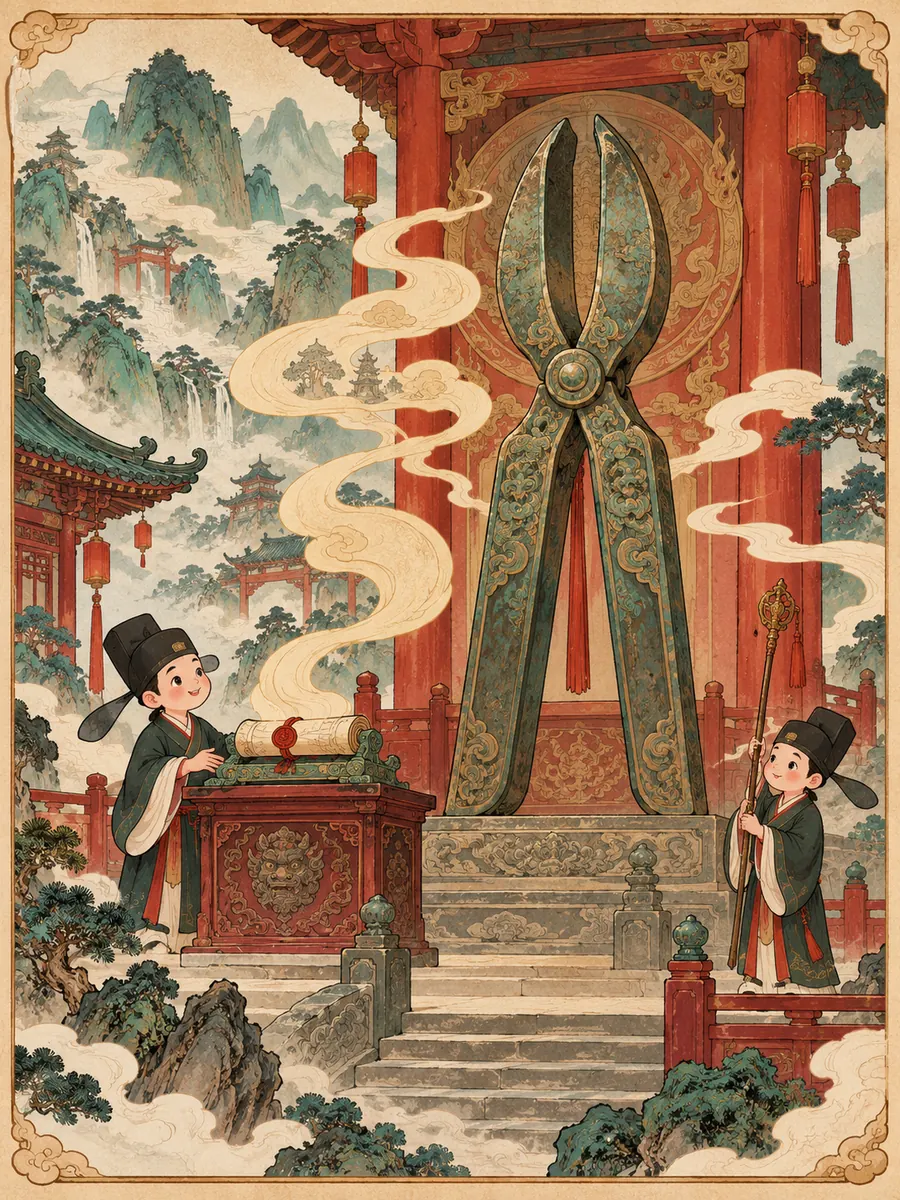
Tongue-Pulling Hell
Words return as echoes, revealing the weight of speech.
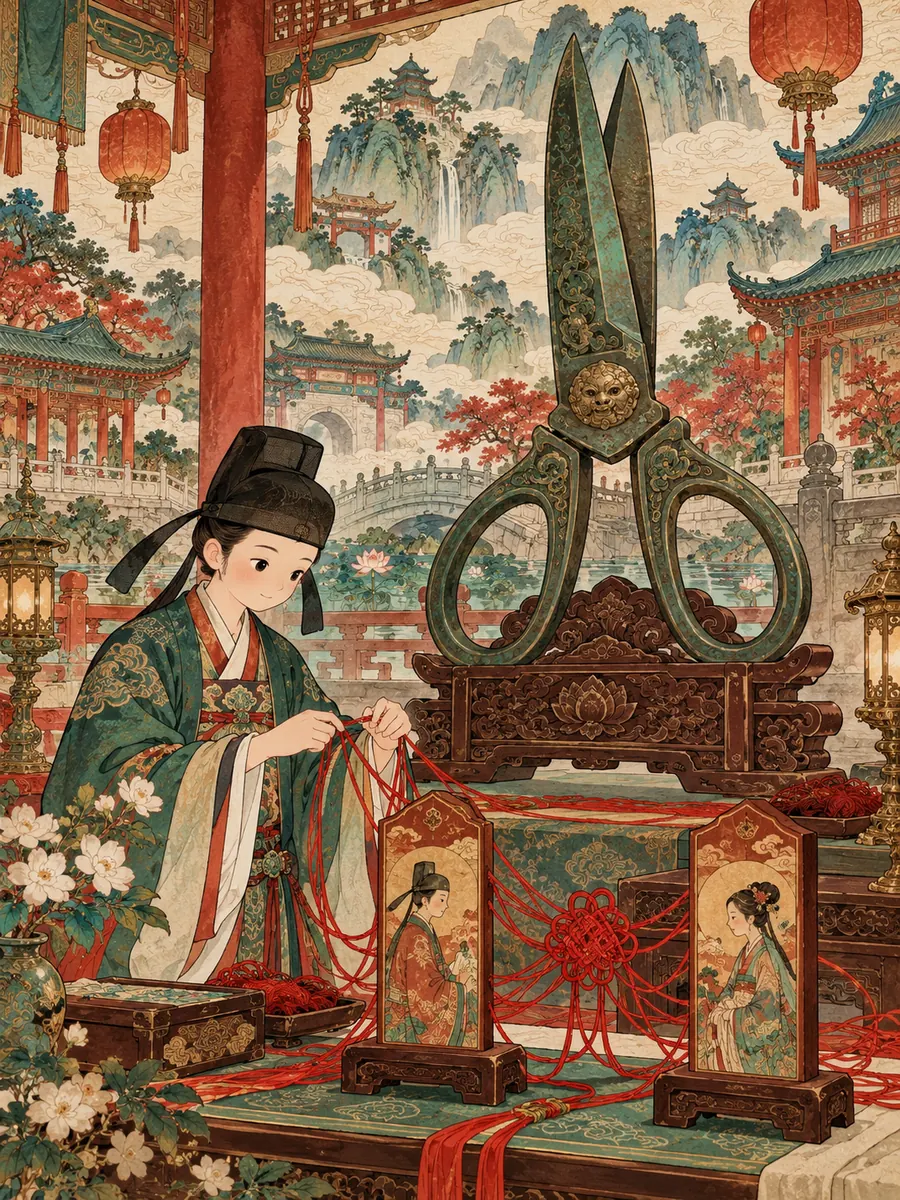
Scissors Hell
An old pair of scissors opens the knots between story and society.
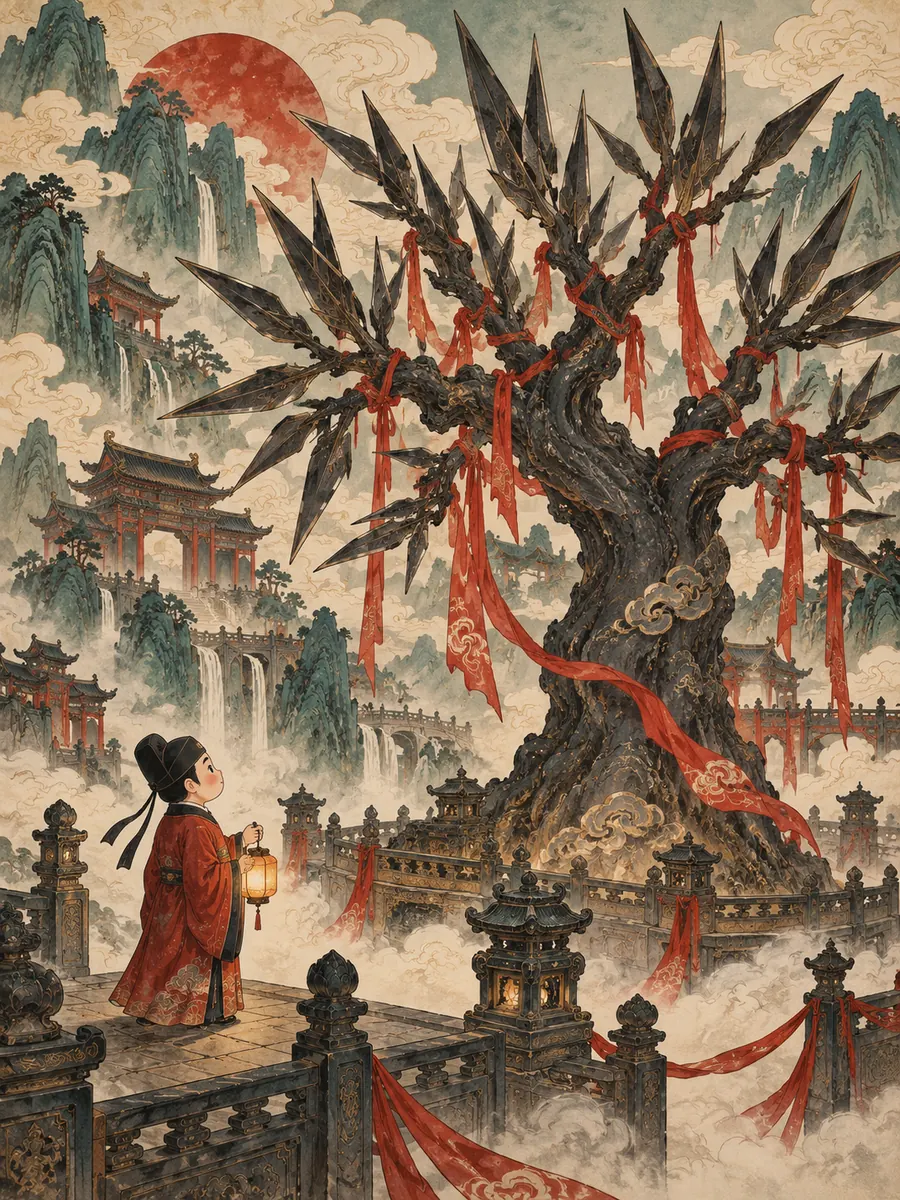
Iron Tree Hell
Iron branches entangle the bonds that malice has divided.
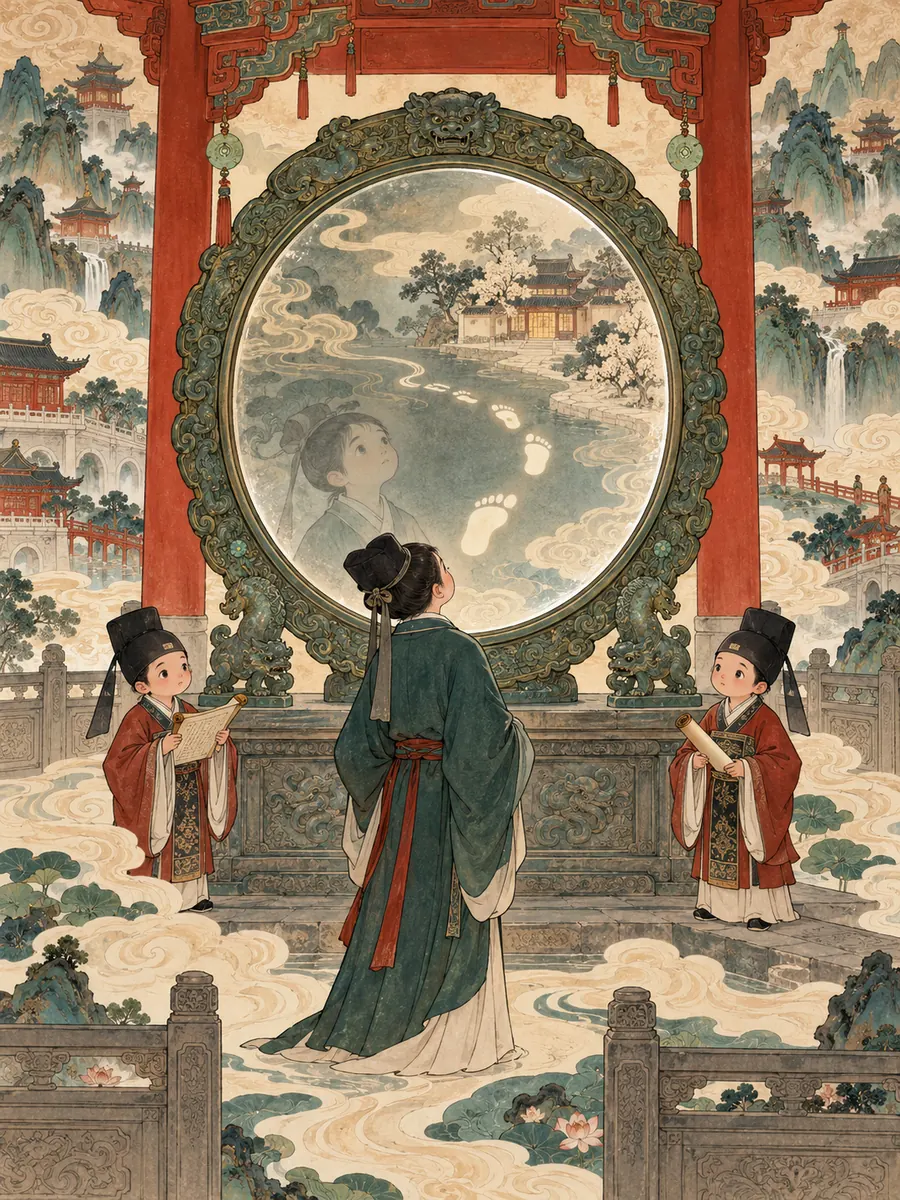
Mirror of Deeds Hell
In a silent mirror, concealed actions appear again.
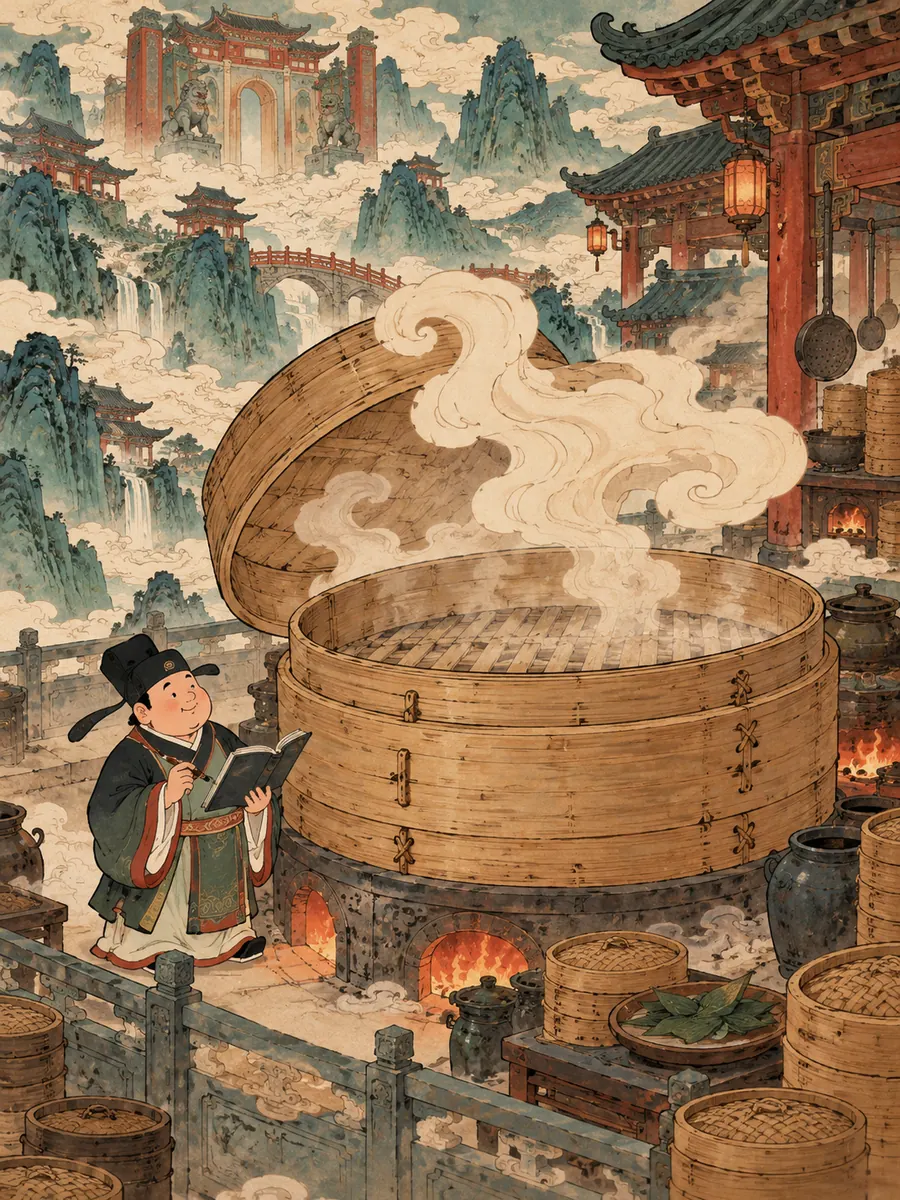
Steamer Hell
Steam circles an old basket; rumours also need examination.
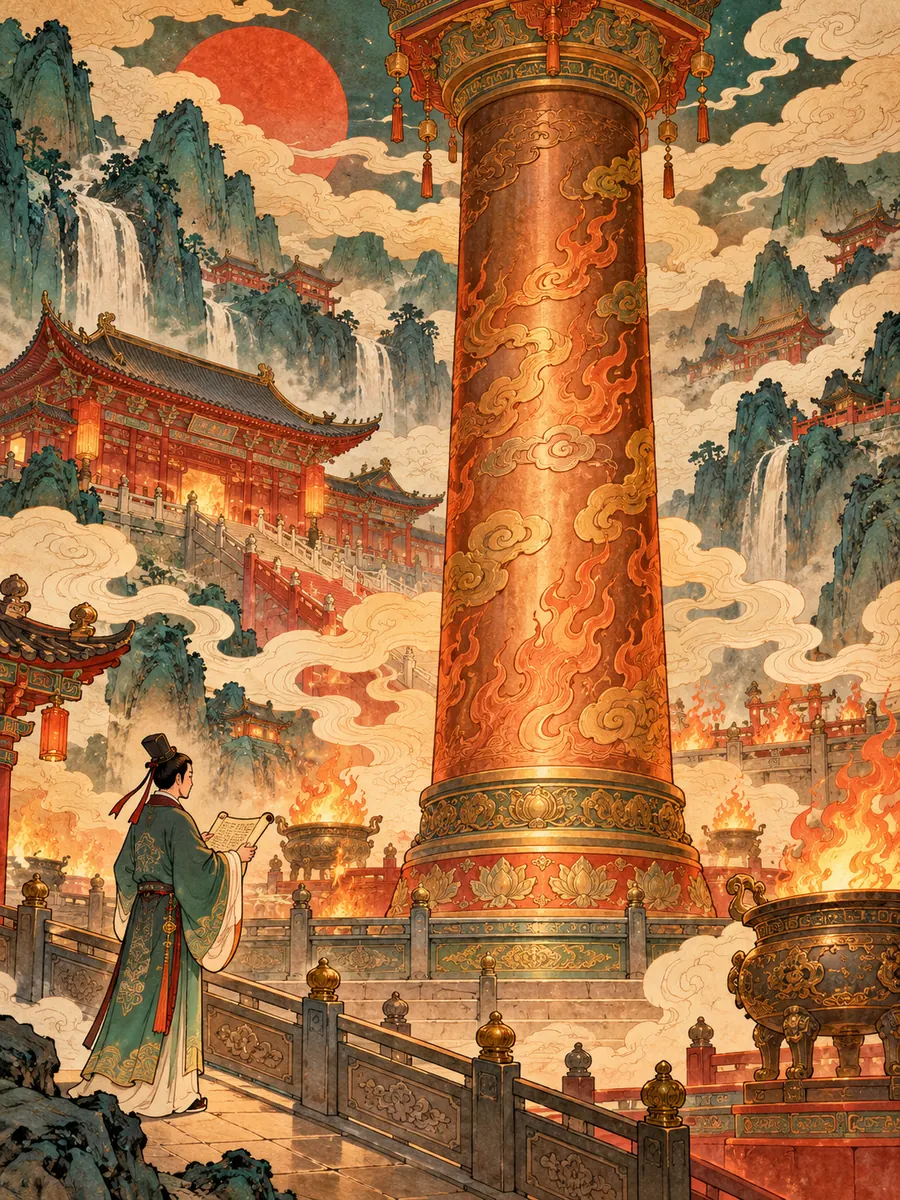
Copper Pillar Hell
Firelight on copper carries an old warning about harm.
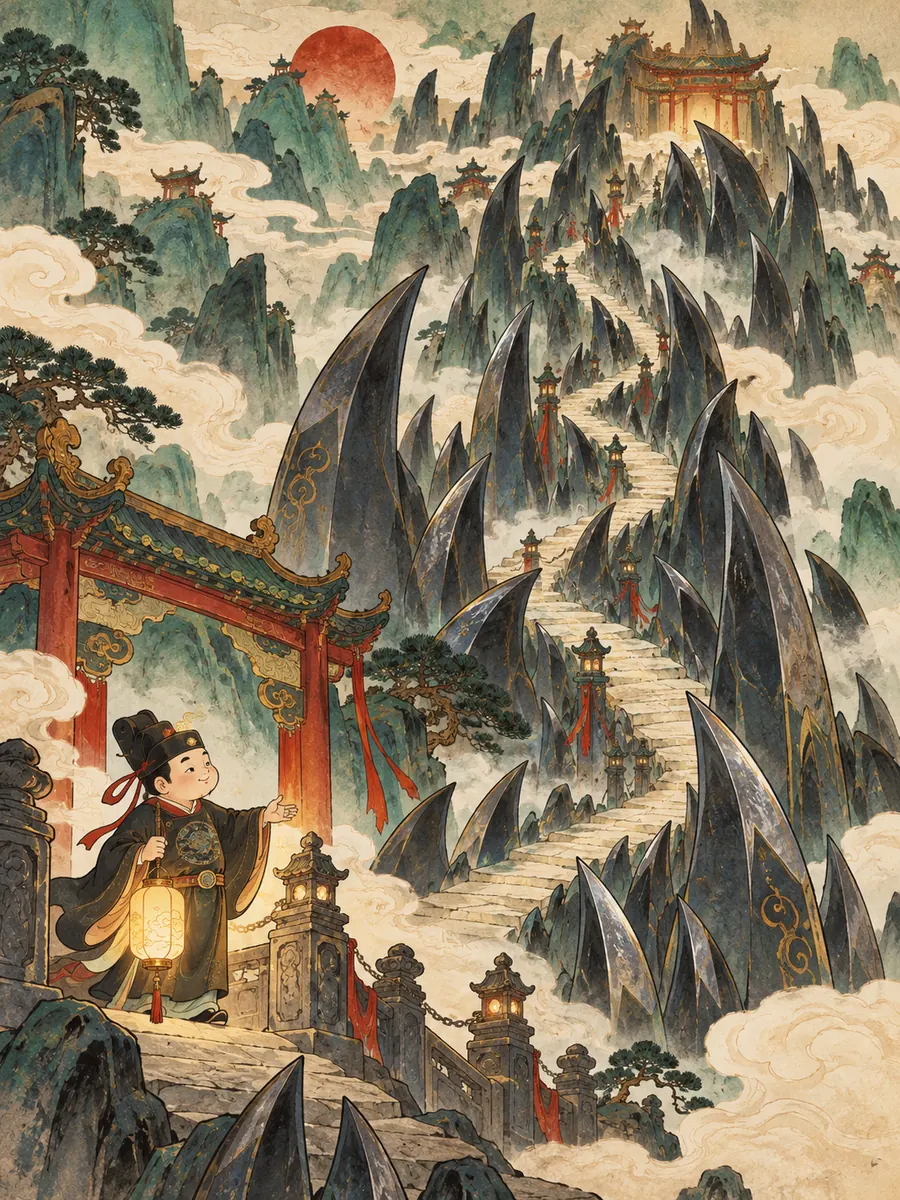
Mountain of Blades Hell
Blade-like peaks turn a mountain path into a warning about life.
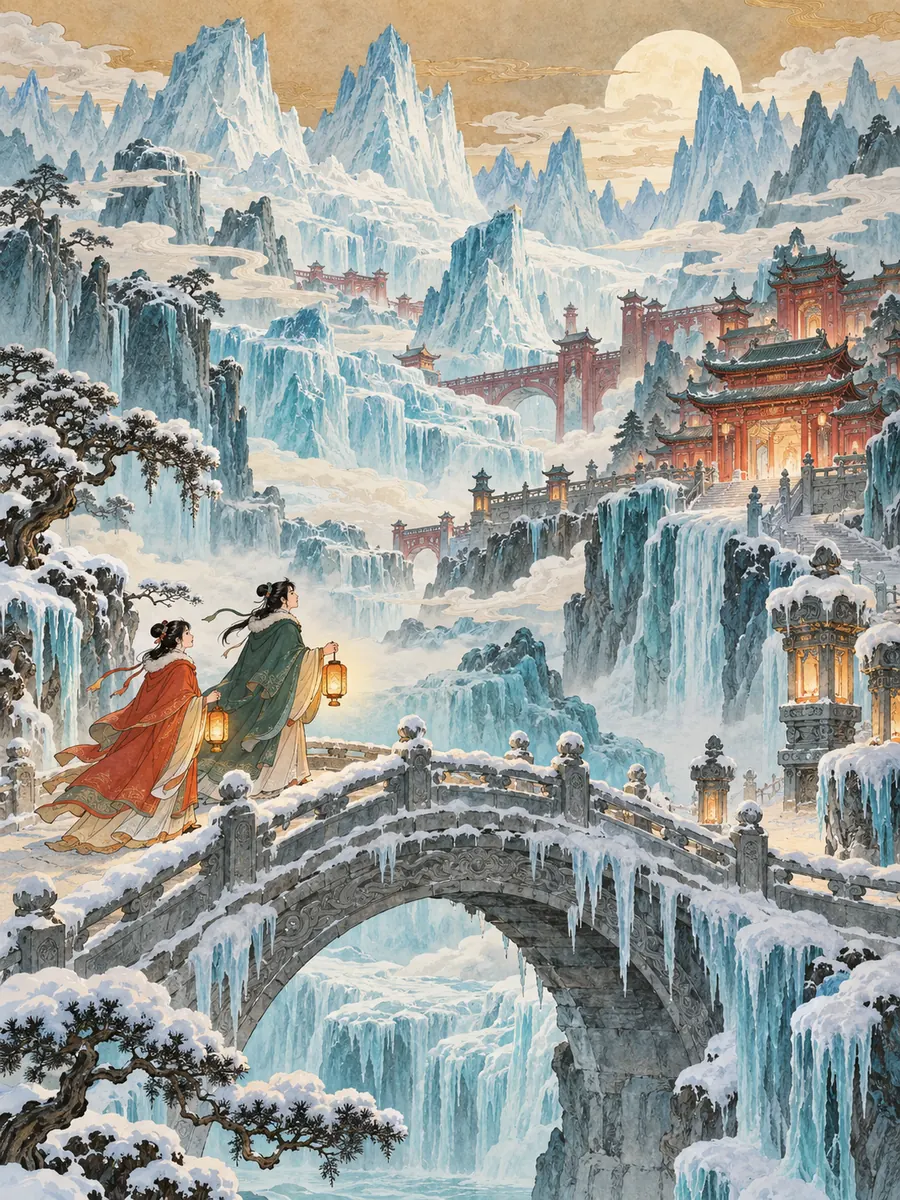
Ice Mountain Hell
Frost-bound peaks reveal another language of the underworld.
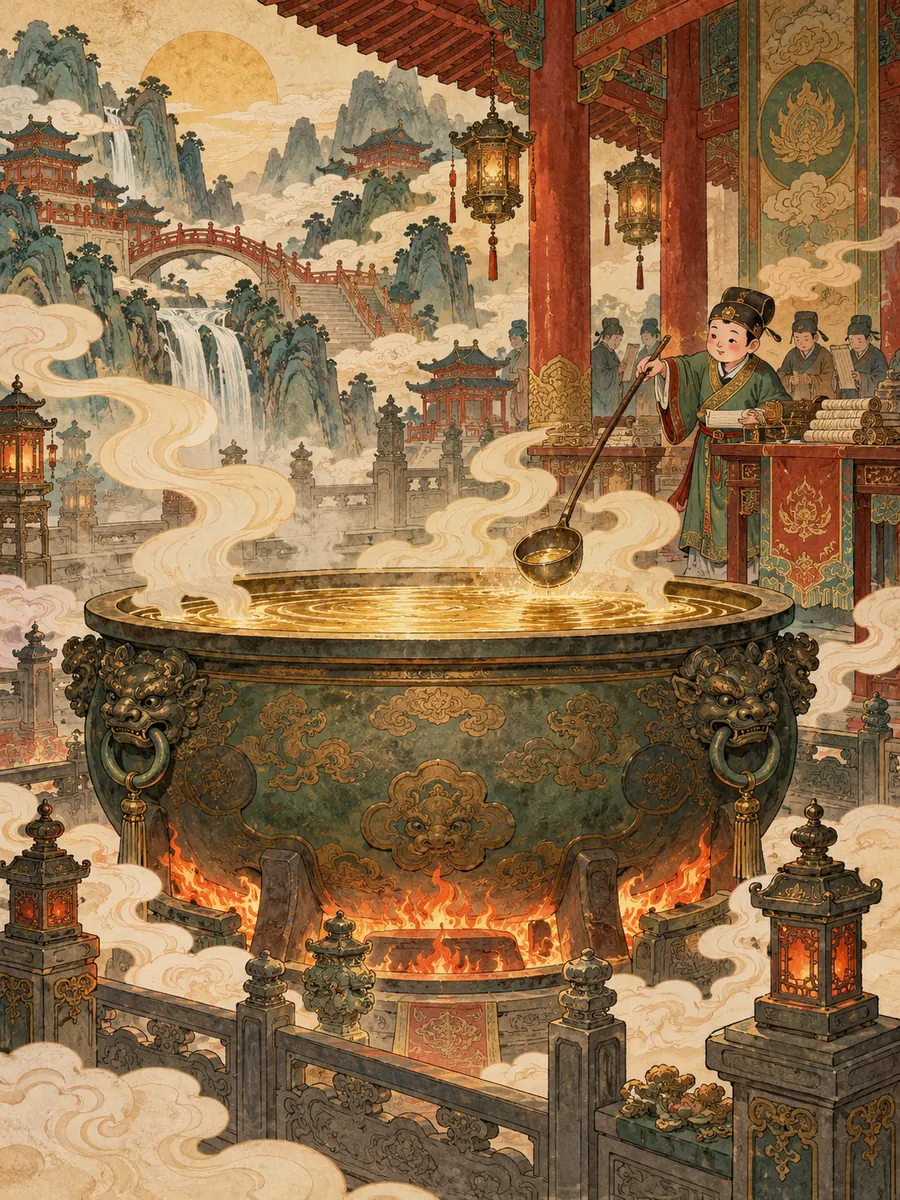
Cauldron Hell
A great old cauldron holds a familiar moral imagination.
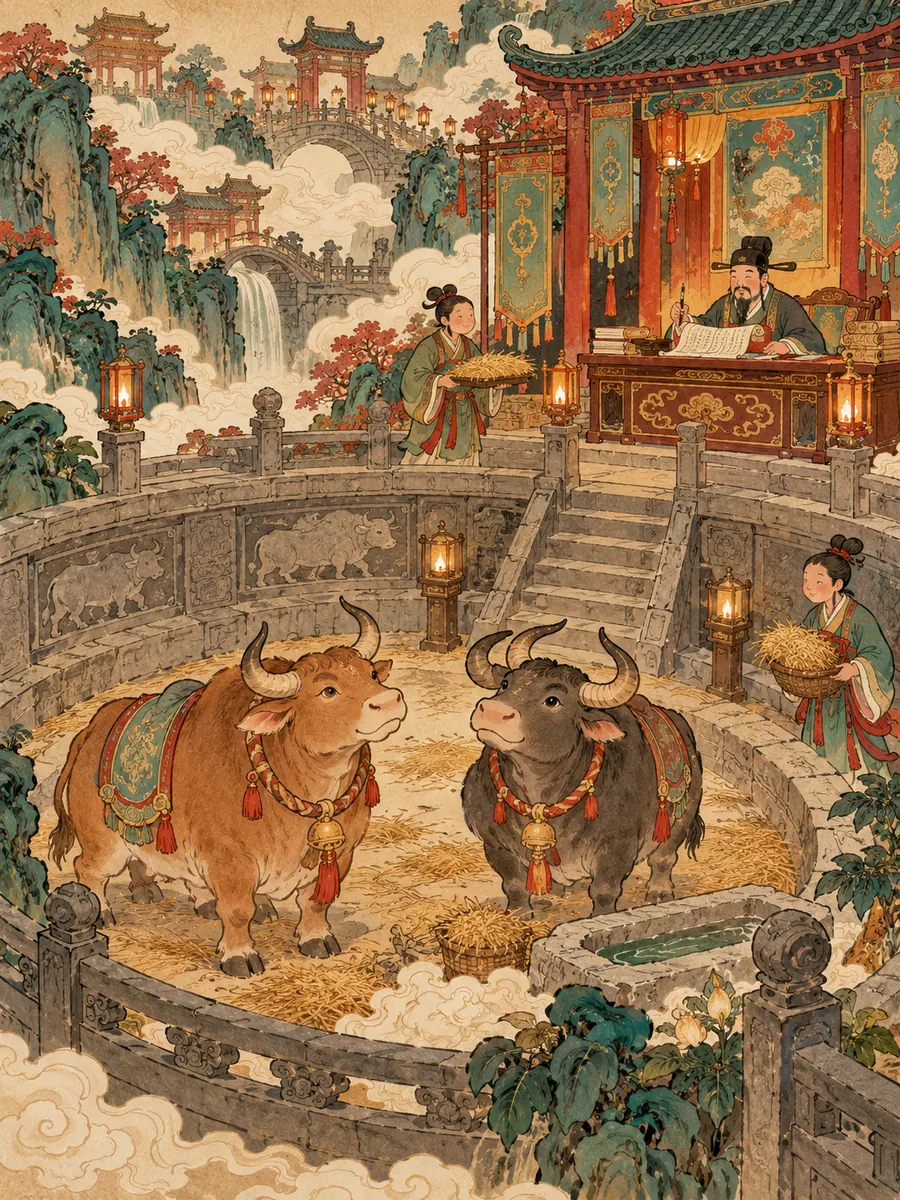
Ox Pit Hell
A herd guards the valley, bringing overlooked lives into the story.
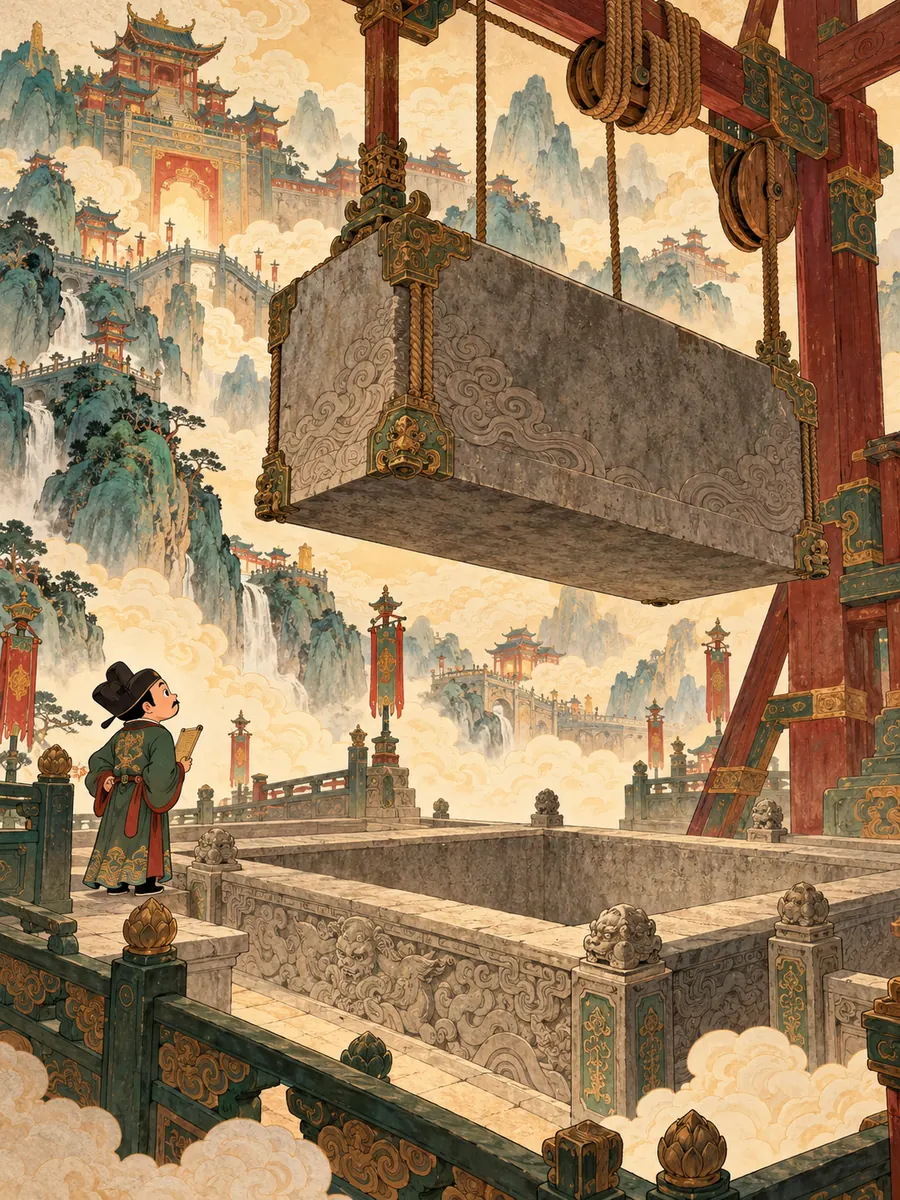
Crushing Stone Hell
A suspended stone recalls stories of harm to the vulnerable.
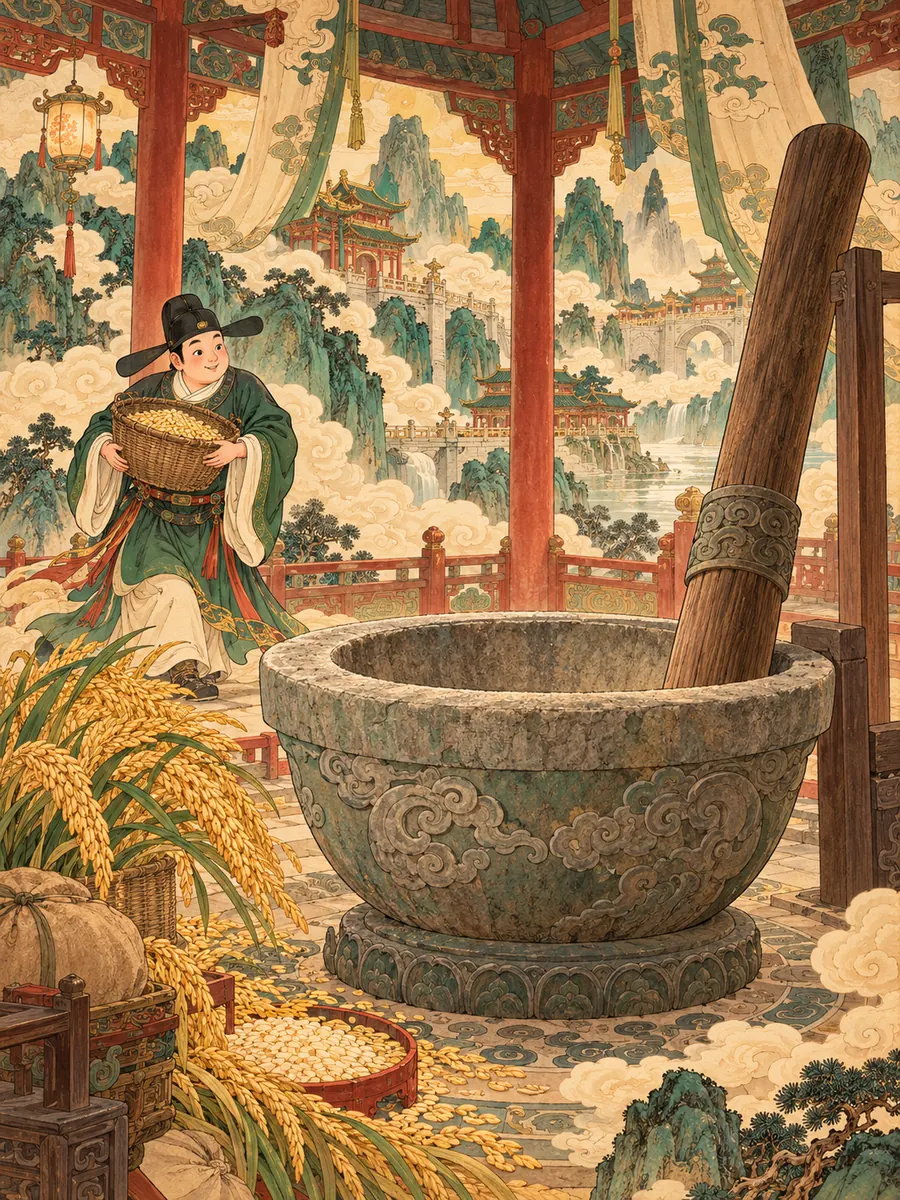
Mortar Hell
A grain beside an old mortar recalls the labour behind food.
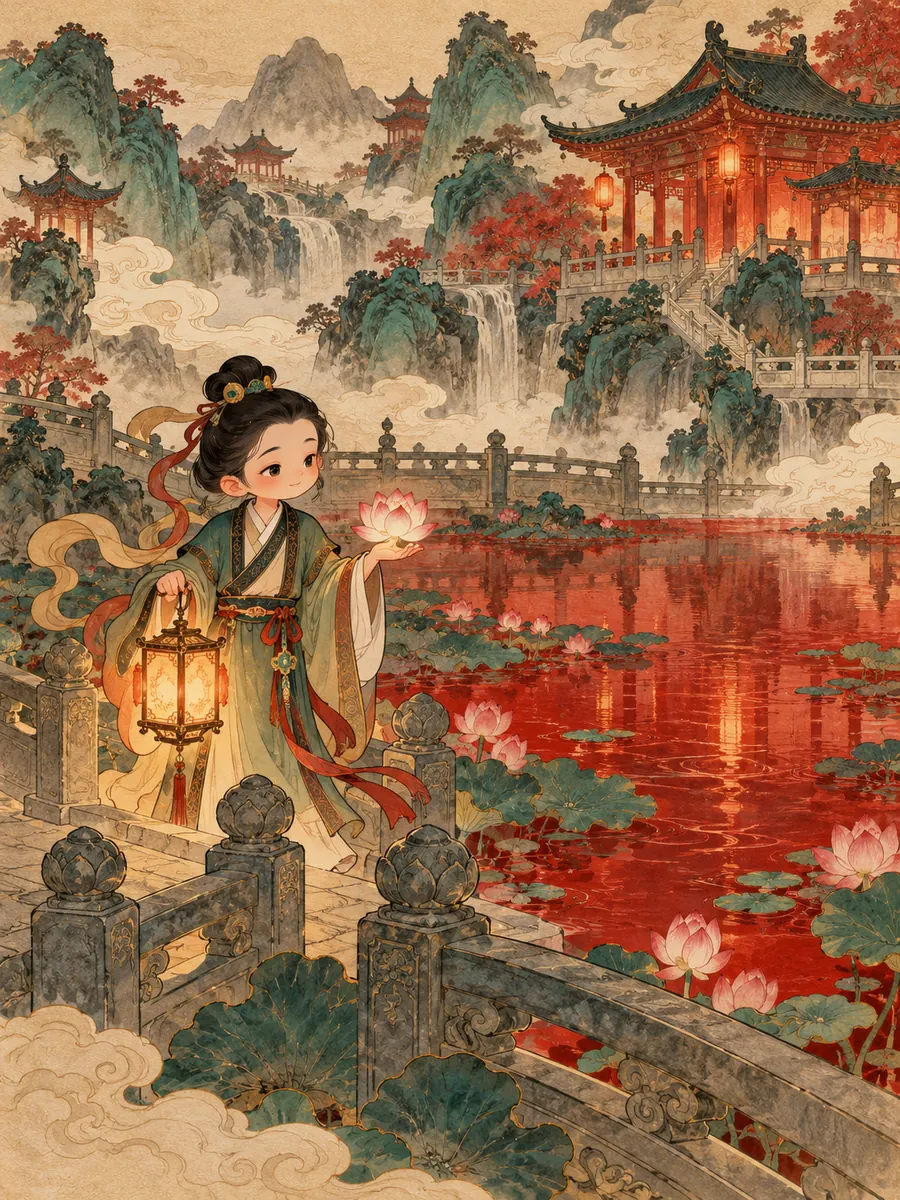
Blood Pool Hell
A red pool reflects old beliefs that require historical context.
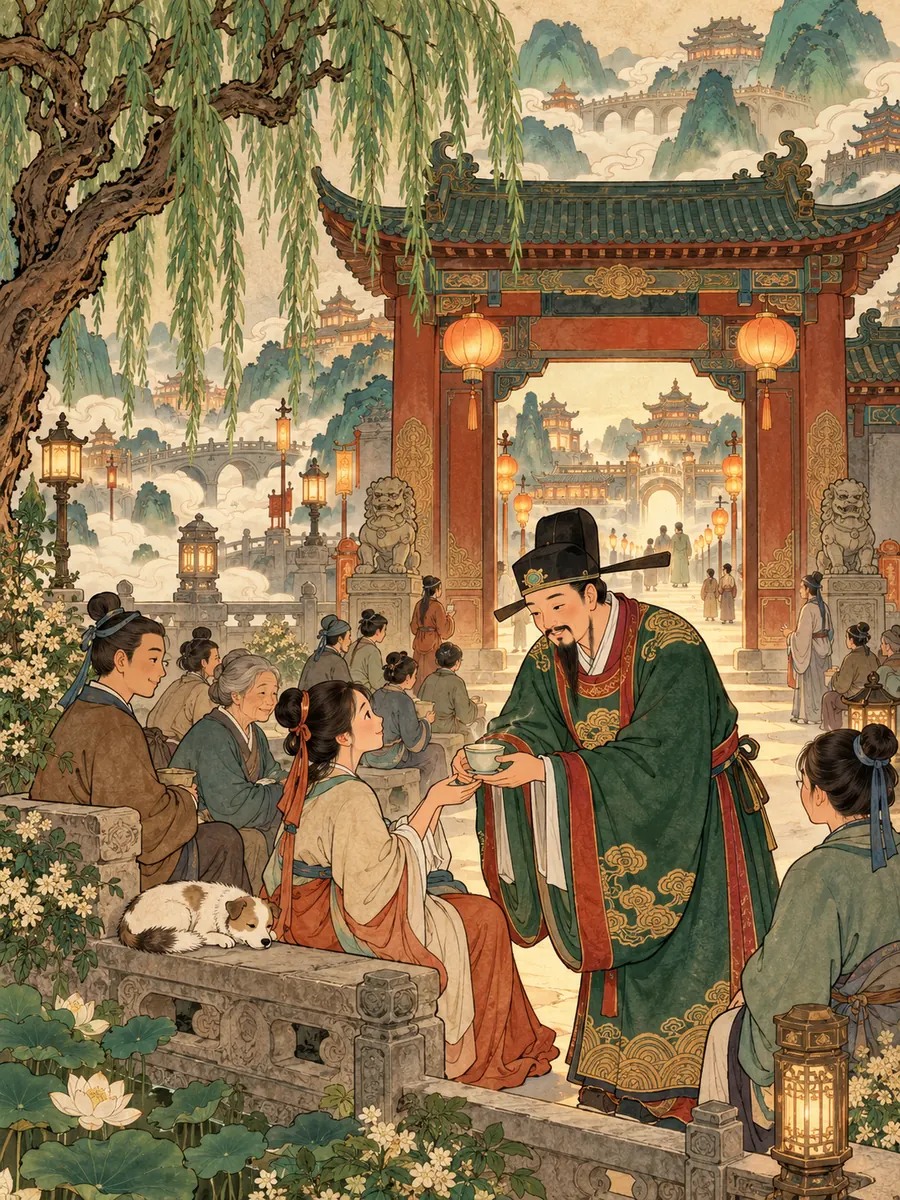
Untimely Death Hell
City lights offer a place for stories of lives interrupted.
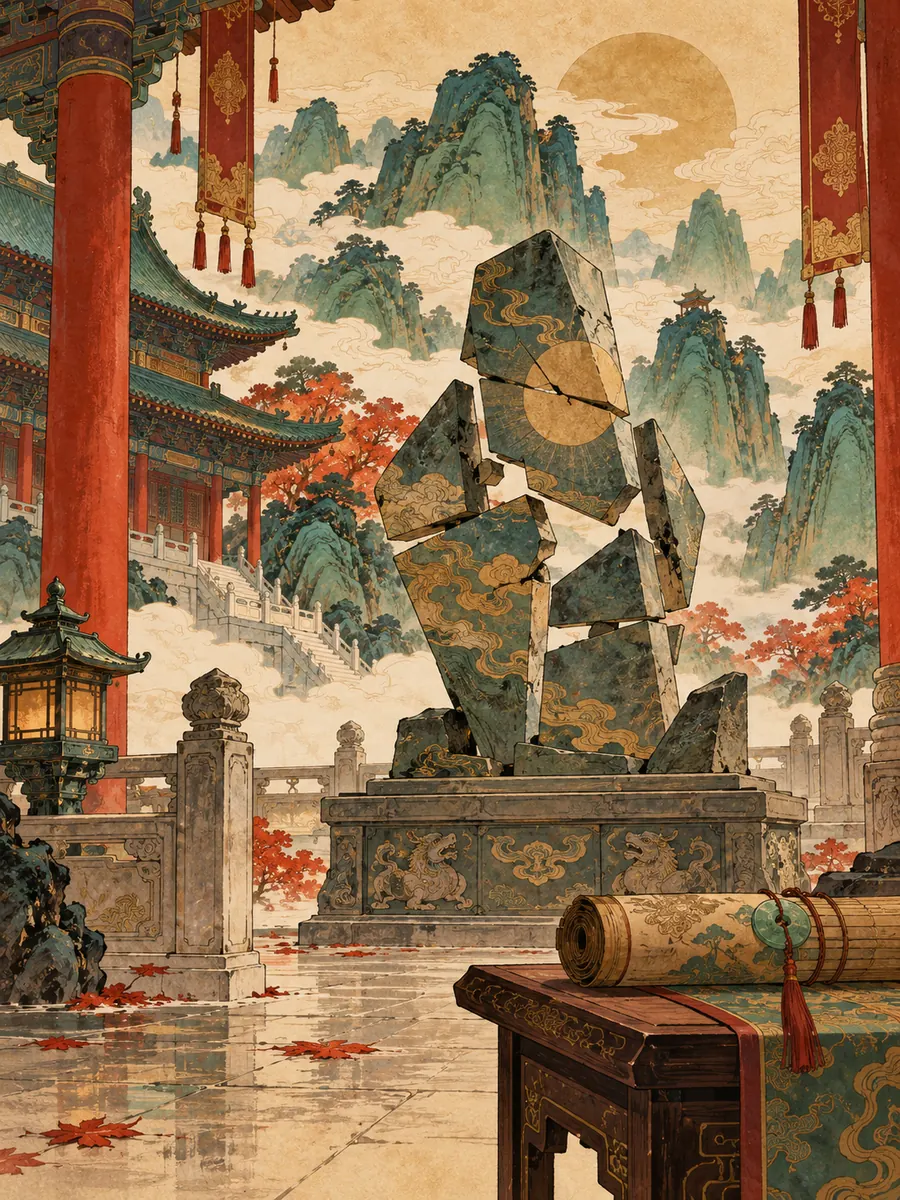
Zhexing Hell
An old penal name frames stories about respect for the dead.
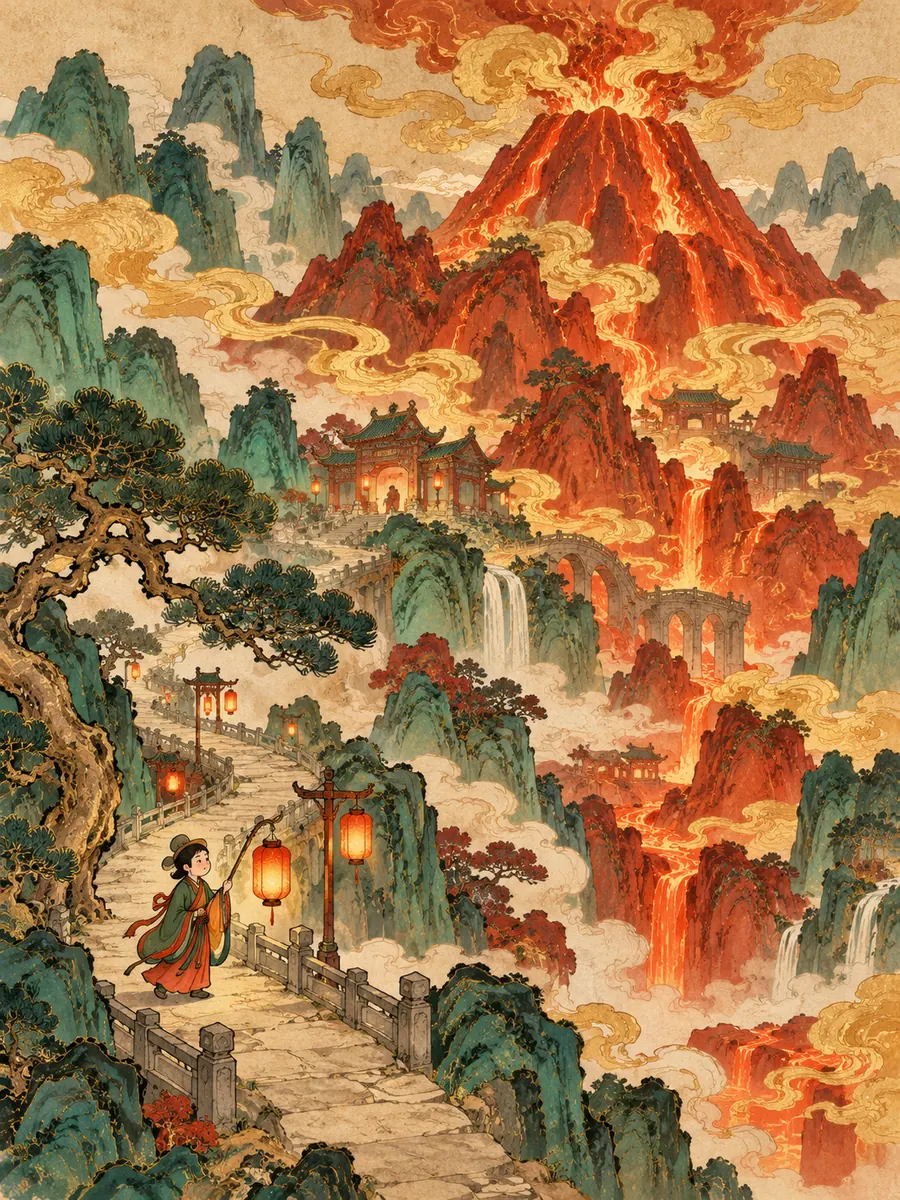
Volcano Hell
Red mountains and cloud-flame turn terrain into a moral image.
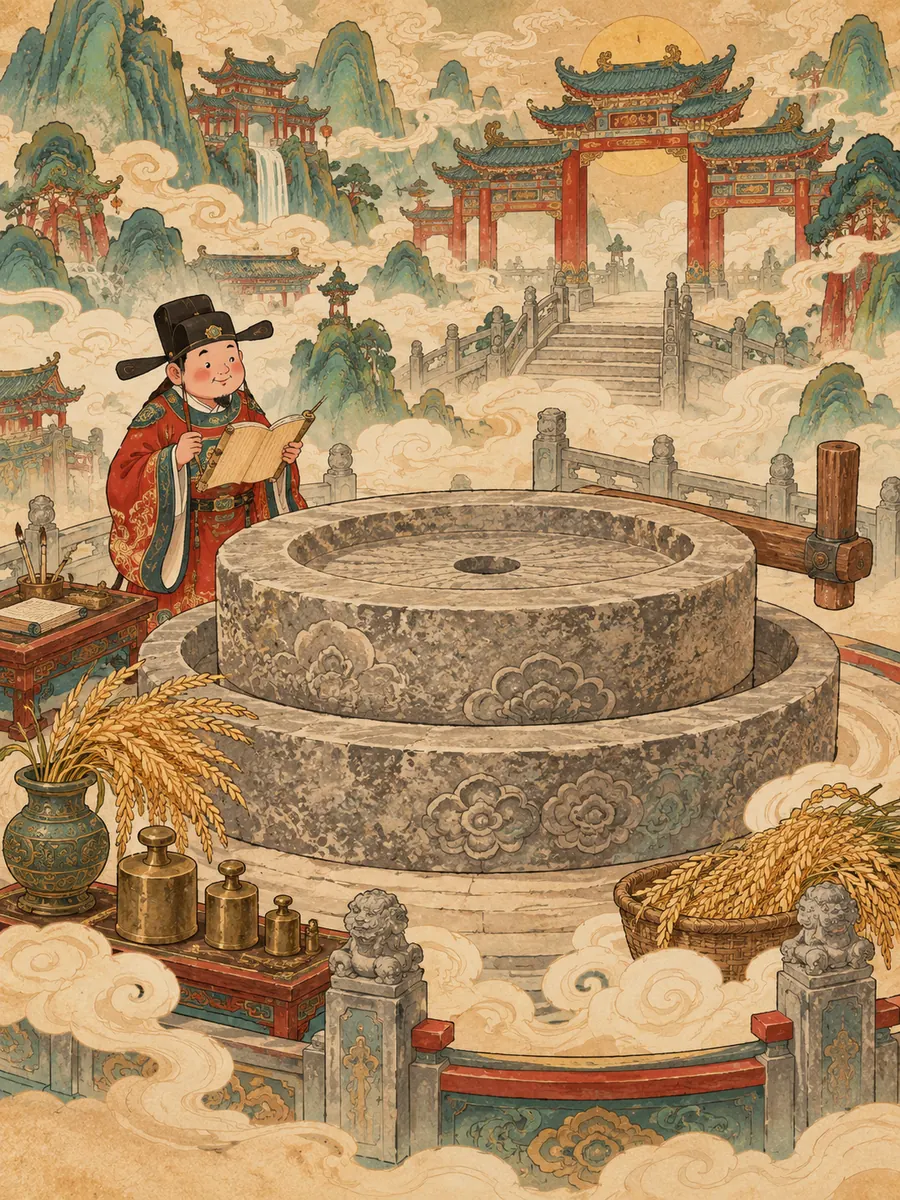
Millstone Hell
A turning mill tells stories of taking, labour and obligation.
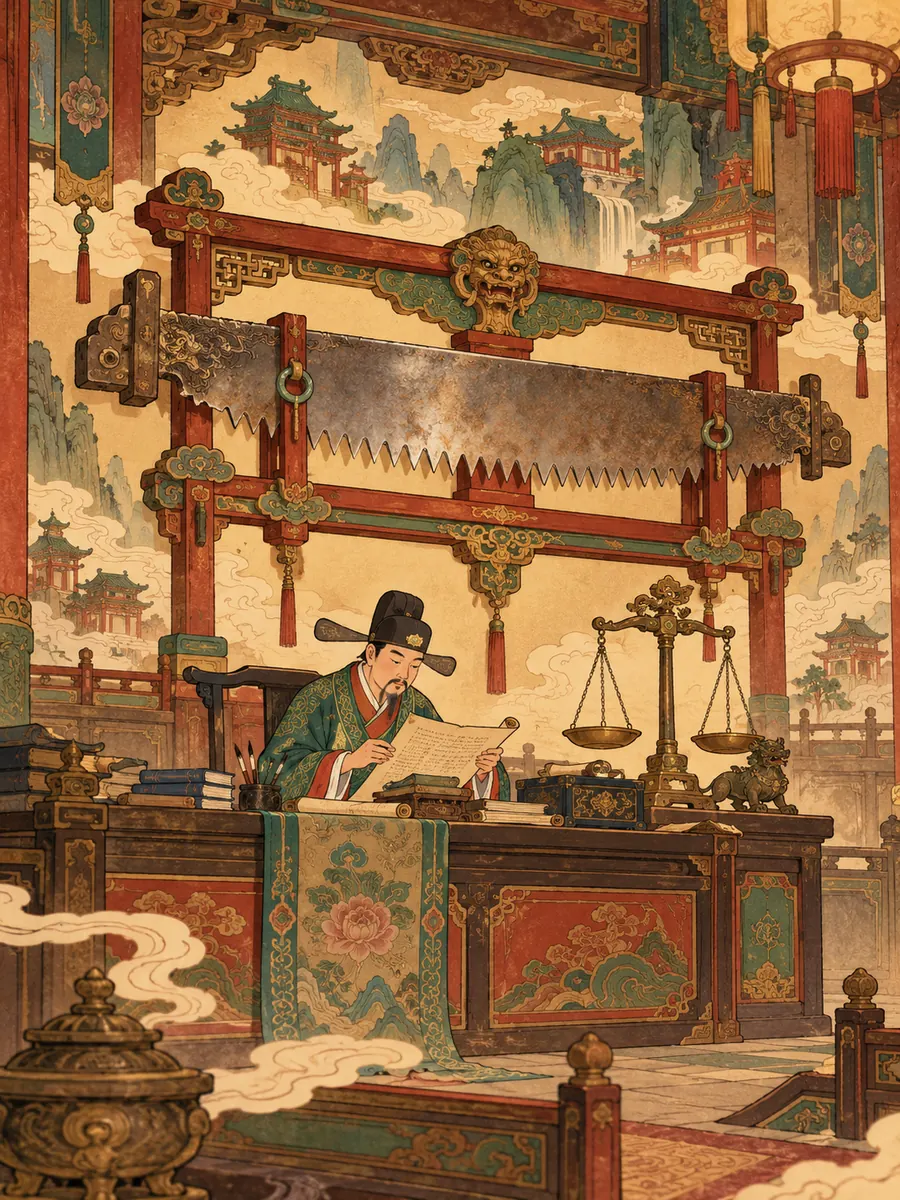
Saw Hell
At the directory's end, distinguish saw imagery from Avici.
The list used in this atlas
This collection follows a familiar Chinese popular sequence beginning with Tongue-Pulling, Scissors and Iron Tree. Its eighteen illustrated entries form a reading directory, not a universal plan of an underground building or a way to predict anyone's fate.
Three different arrangements
The Shiba Nili Jing describes eight fiery and ten cold hells under different names. Its account includes location and environment as well as suffering; it cannot simply be described as time without space. Other Buddhist texts use other classifications. Morality books such as Yuli Baochao organize major and subsidiary hells around ten courts. The popular eighteen-name list shares images with these traditions, but its positions do not map directly onto ten kings.
Reading individual scenes
Each entry explains its imagery, narrative purpose and limits. Historical ideas about marriage, gender, illness and death require context, rather than endorsement as present-day offences. Unverified exact punishment durations are omitted.
Beyond punishment
Underworld stories also concern rescue, appeals for justice, remembrance and rebirth. Follow Kshitigarbha, the Ten Kings, the City of Untimely Death and the Six Realms to explore those other directions.
You’ve met the spirits. Write your own story.
These fictional games are for entertainment. Scores, probabilities and character outcomes do not represent traditional karma or actual destiny.
Play the game