Six Realms of Rebirth
Six conditions of life illuminate impermanence and compassion.
The Six Realms 6
The sequence follows the narrative version used in this collection. Illustrations are modern cultural interpretations.
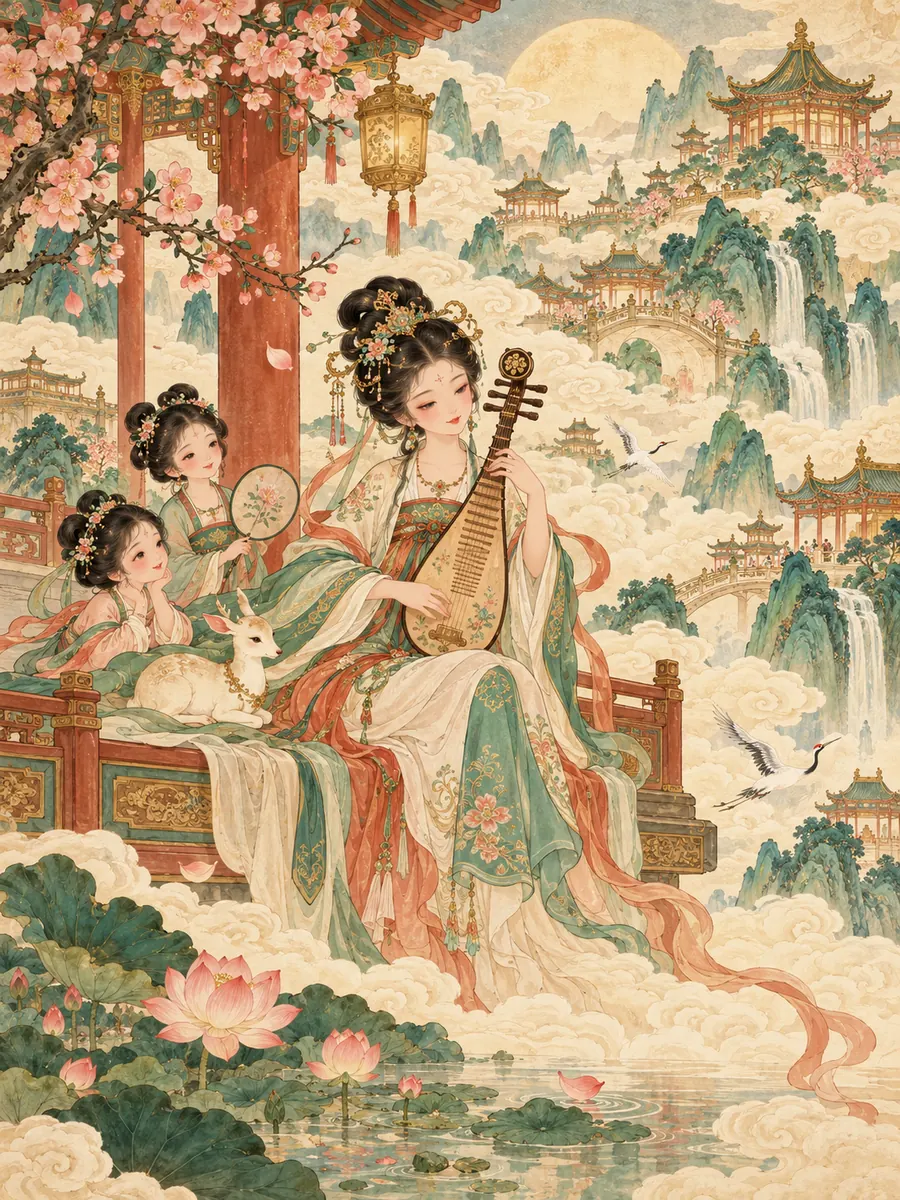
Heavenly Realm
Even the pleasures above the clouds remain impermanent.
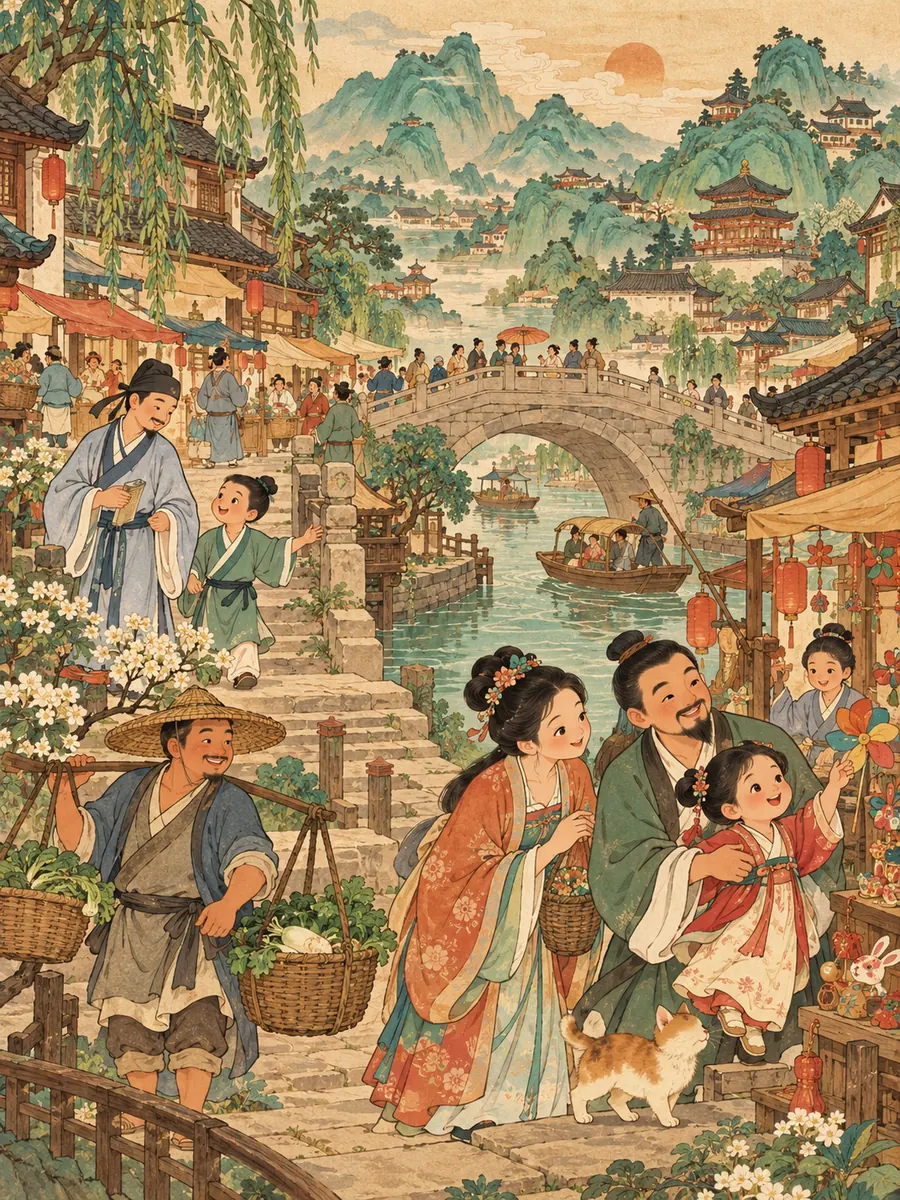
Human Realm
In ordinary human lives, sorrow and joy leave room for choice.
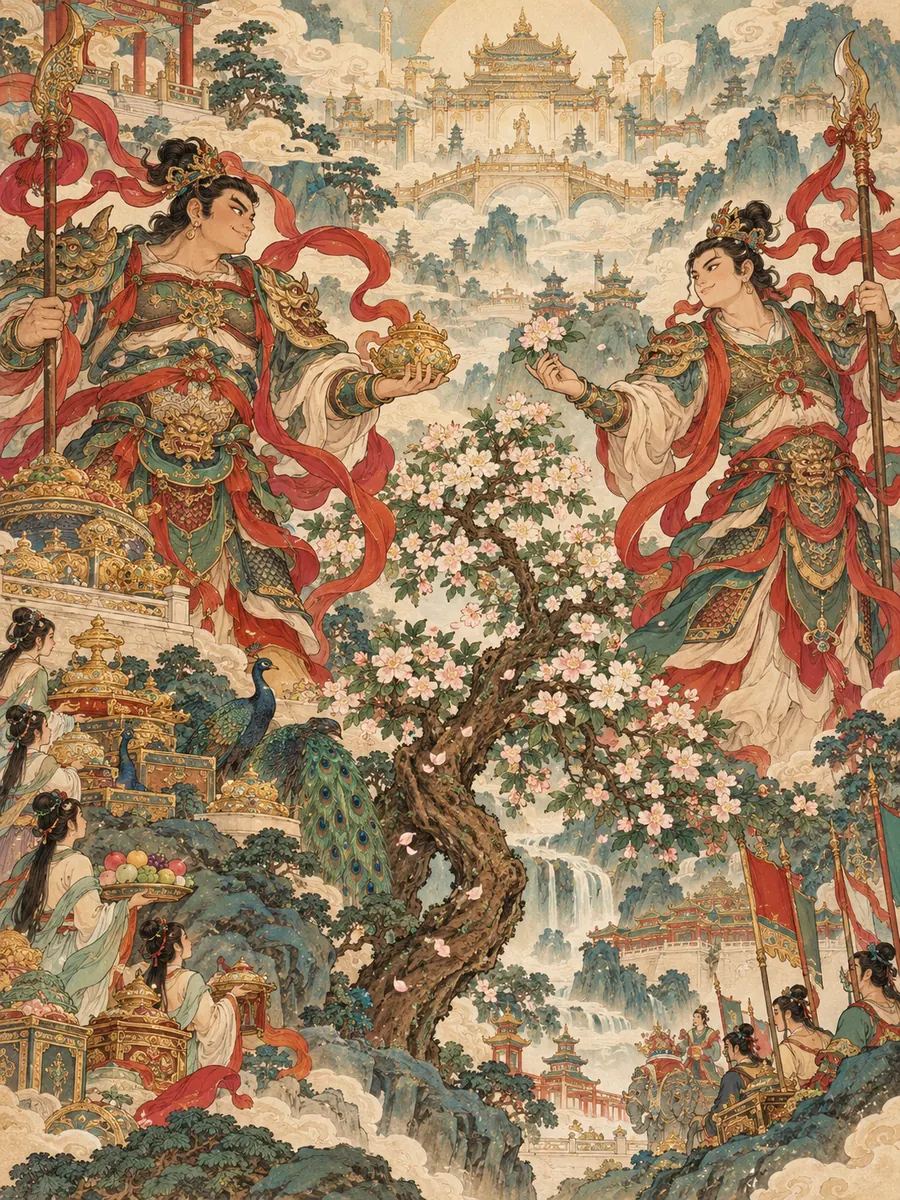
Asura Realm
Great strength does not always bring a peaceful heart.
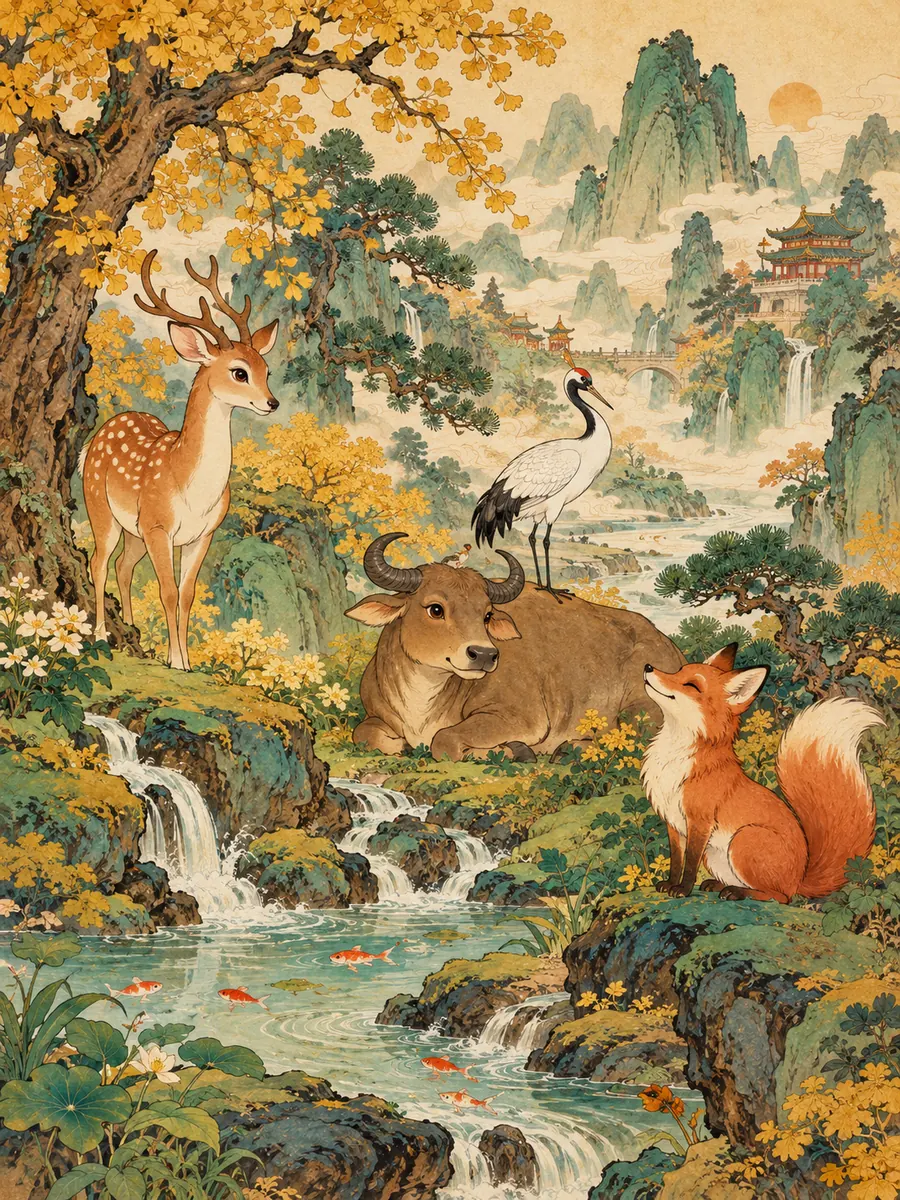
Animal Realm
Lives in forests and waters also deserve attention and care.
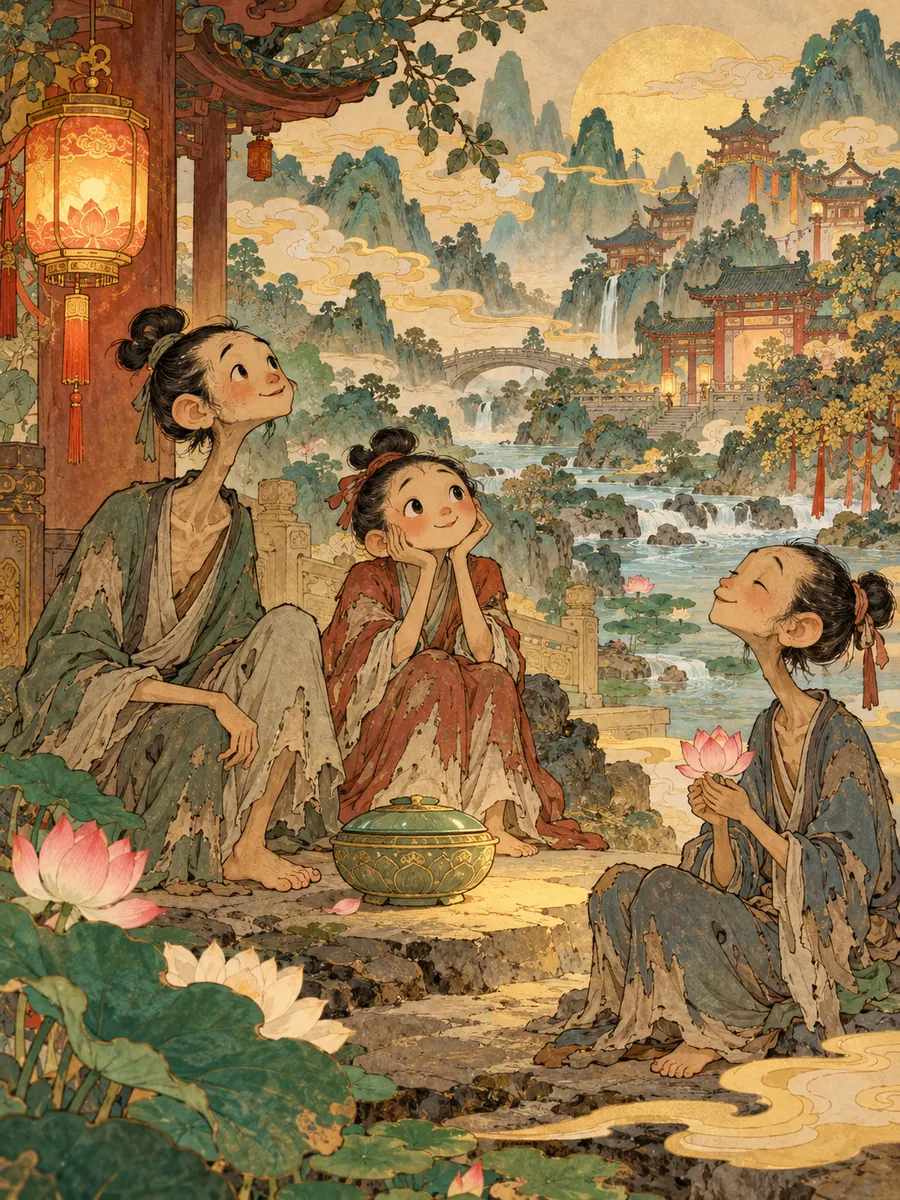
Hungry Ghost Realm
Unfulfilled hunger gives a visible form to grasping—and to care.
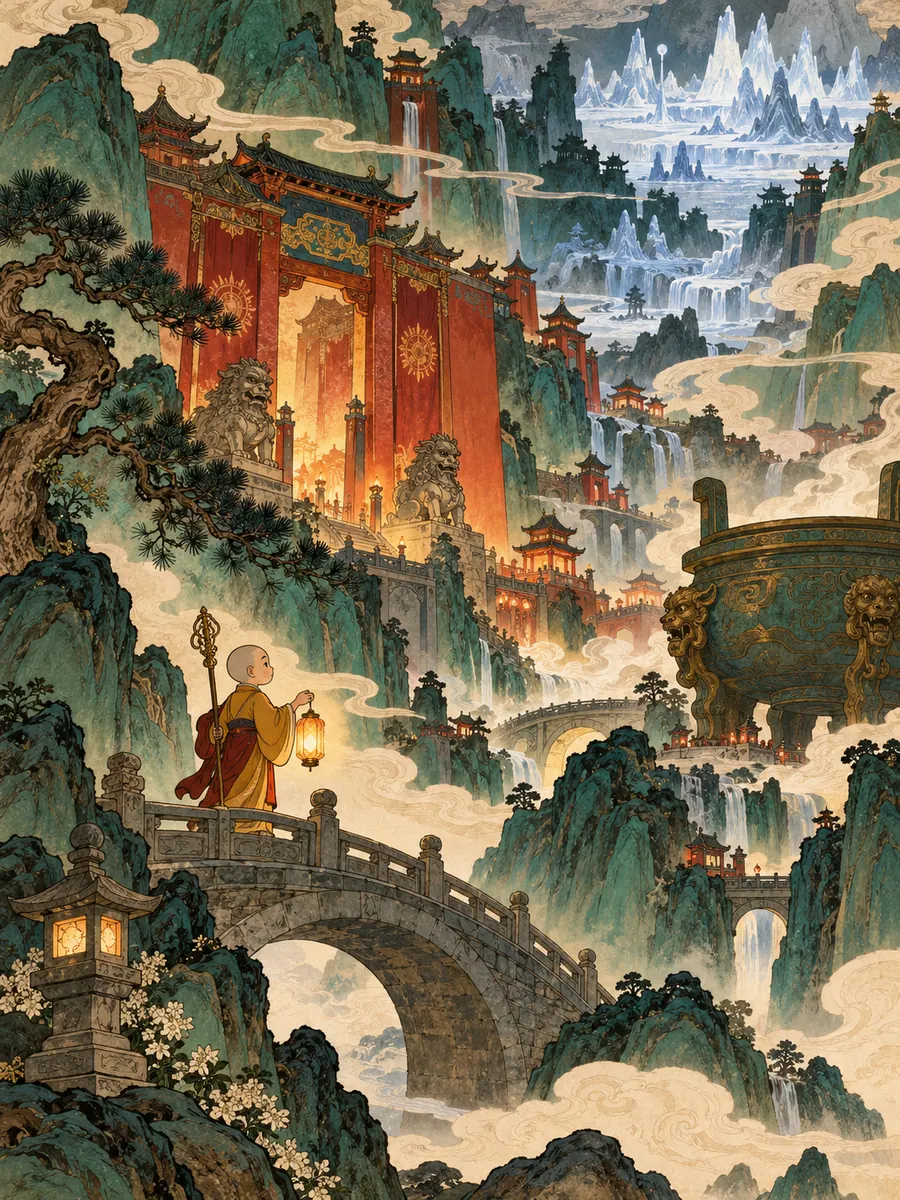
Hell Realm
Read the warning in the darkness, and the promise of compassion.
What are the six realms?
The six realms, also called six destinies, are a Buddhist classification of different conditions within the cycle of birth and death: devas, humans, asuras, animals, hungry ghosts, and hell beings. They explain existence, suffering, happiness, and causation within a religious tradition. They are not a test for identifying an individual's former life. No realm simply corresponds to a modern social class, occupation, or physical condition.
Five destinies and six realms
Some texts use five destinies without listing asuras independently; others give asuras a separate place and speak of six. These are differences of classification, not a numerical test of authenticity. Heavens and hungry ghosts also have many internal divisions. The six illustrated entrances provide a readable framework rather than an exhaustive account of Buddhist cosmology.
Karma is not a game score
Buddhist discussions of karma concern intentional actions of body, speech, and mind and the conditions of their results. Popular tables pairing good or bad actions with rebirth require the context of particular texts and teachings. They should not become a points system in which a fixed number of good deeds purchases a realm. Wealth, illness, and misfortune likewise do not authorize judgments about another person's past. The cultural themes of compassion and ethical reflection deserve more attention than verdicts about actual people.
Rebirth in Chinese underworld stories
Chinese popular stories make rebirth visible through King Zhuanlun issuing a new birth, Granny Meng offering soup, and souls crossing a bridge. These motifs developed alongside the Ten Kings, local rituals, and literature. They do not imply that every Buddhist tradition prescribes the same route. Heaven is not Buddhahood, and hell is not the entire underworld. Reading the individual entries makes those differences easier to see.
Six pictures, six ways to begin
Each entry explains a realm's basic meaning, narrative condition, visual motifs, and common confusions. The paper textures and rounded figures follow classical Chinese animation as a contemporary artistic interpretation. Wanlingsi's games borrow the six-realm theme for fictional results; their scores, probabilities, and character destinies do not determine religious karma.
You’ve met the spirits. Write your own story.
These fictional games are for entertainment. Scores, probabilities and character outcomes do not represent traditional karma or actual destiny.
Play the game